


Housing affordability remains one of the most significant challenges facing the Greater Toronto and Hamilton Area (GTHA). While much of the conversation often focuses on interest rates, home prices, and housing supply, a new report is highlighting another important piece of the housing ecosystem: social housing.
Recent research suggests that investing in social housing may not only help address affordability challenges but could also generate substantial economic benefits for the region over the coming decades.
Blog
What Happened?
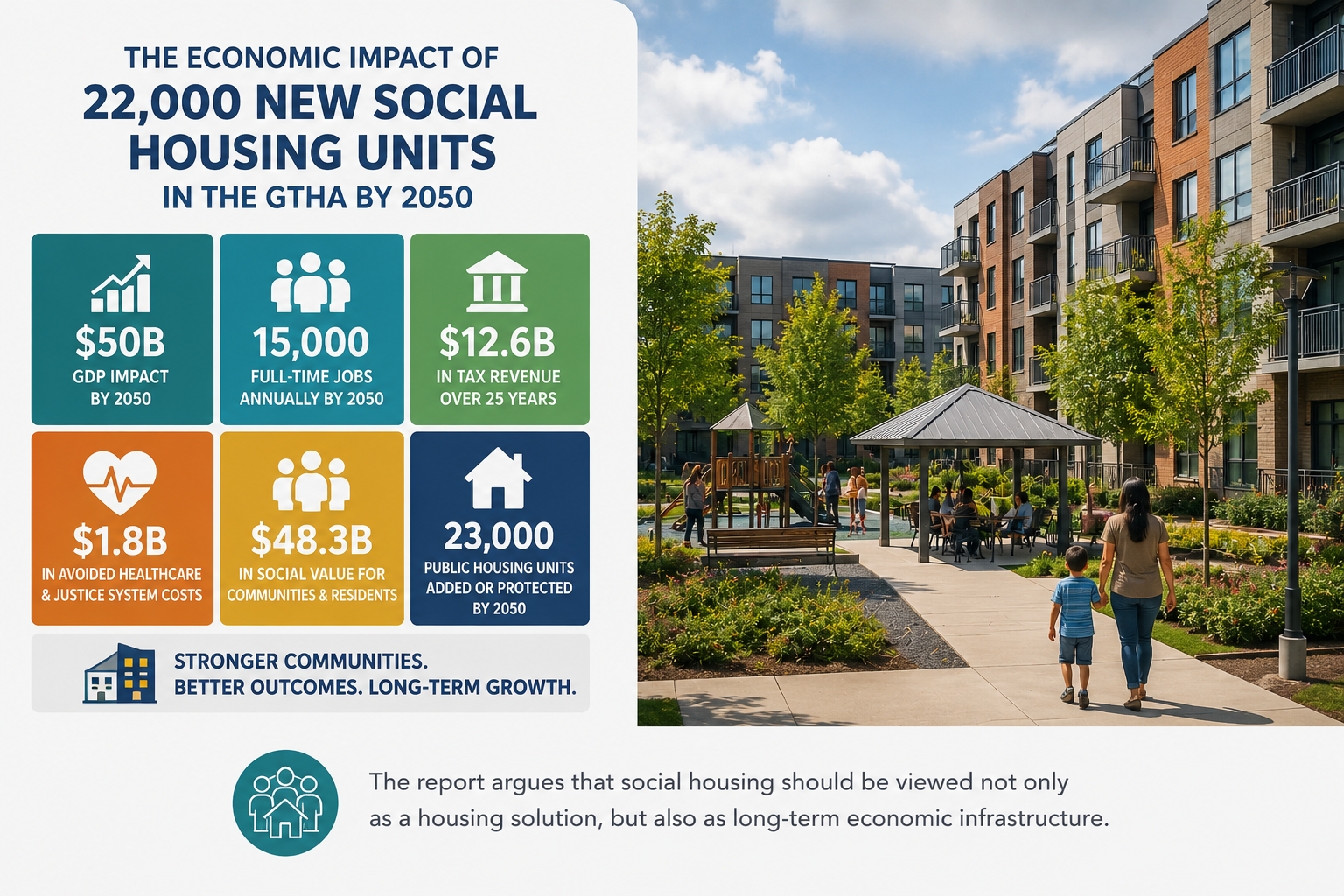
A new report commissioned by the GTHA Community Housing Collaborative and prepared by the Canadian Centre for Economic Analysis examined the long-term impact of expanding public and social housing across the region.
The report projects that adding approximately 22,000 new social housing units by 2050 could generate nearly $50 billion in economic activity, support roughly 15,000 full-time jobs annually, and create billions of dollars in additional tax revenue.
Beyond economic output, the study also highlights broader societal benefits, including improved housing stability, better health outcomes, reduced pressure on emergency services, and stronger community well-being.
Perhaps most notably, the report concludes that the strongest outcome comes from a balanced approach that combines building new social housing with preserving and repairing existing housing stock.
Why This Matters
Housing is often viewed primarily through the lens of real estate. However, this report reinforces a larger reality: housing is also economic infrastructure.
When individuals and families have access to stable, affordable housing, they are better positioned to participate in the workforce, maintain their health, support local businesses, and contribute to their communities.
Conversely, when housing becomes increasingly unattainable, the effects extend far beyond the real estate market. Employers face workforce challenges, public services experience greater demand, and economic productivity can suffer.
For policymakers, investors, and housing professionals, the report adds weight to the growing argument that affordability solutions require more than private market development alone.
What It Means for Buyers
For prospective homebuyers, increased investment in social and affordable housing may help create a healthier and more balanced housing ecosystem over time.
While social housing will not directly impact homeownership opportunities for most buyers, it can help reduce pressure throughout the broader housing system by providing housing options for residents who may otherwise compete in the private rental market.
A more balanced housing market often leads to greater stability, improved community development, and stronger long-term planning across municipalities.
Buyers should recognize that housing affordability initiatives are increasingly becoming part of the larger conversation shaping future market conditions in Ontario.
What It Means for Sellers
For sellers, this report is another reminder that housing policy and infrastructure investments can influence local market dynamics over the long term.
Communities that successfully address housing affordability challenges often become more resilient, economically diverse, and attractive to residents and businesses.
While social housing investments are unlikely to have a direct short-term impact on property values, they can contribute to stronger regional growth, improved workforce retention, and healthier local economies—all factors that support long-term housing demand.
The key takeaway for sellers is that housing affordability is becoming an increasingly important factor in the sustainability of future market growth.
What It Means for Investors
Investors should pay close attention to the broader implications of this report.
Population growth, housing affordability, and rental demand remain deeply interconnected. As governments continue to search for solutions to Ontario’s housing challenges, public housing investments may become a larger component of future housing strategies.
For long-term investors, this signals a market environment where housing policy, government funding programs, and infrastructure investments could play an increasingly important role in shaping opportunities.
Understanding how these initiatives interact with private housing supply, rental demand, and regional growth trends will become increasingly valuable when evaluating investment decisions.
What Readers Should Watch Next
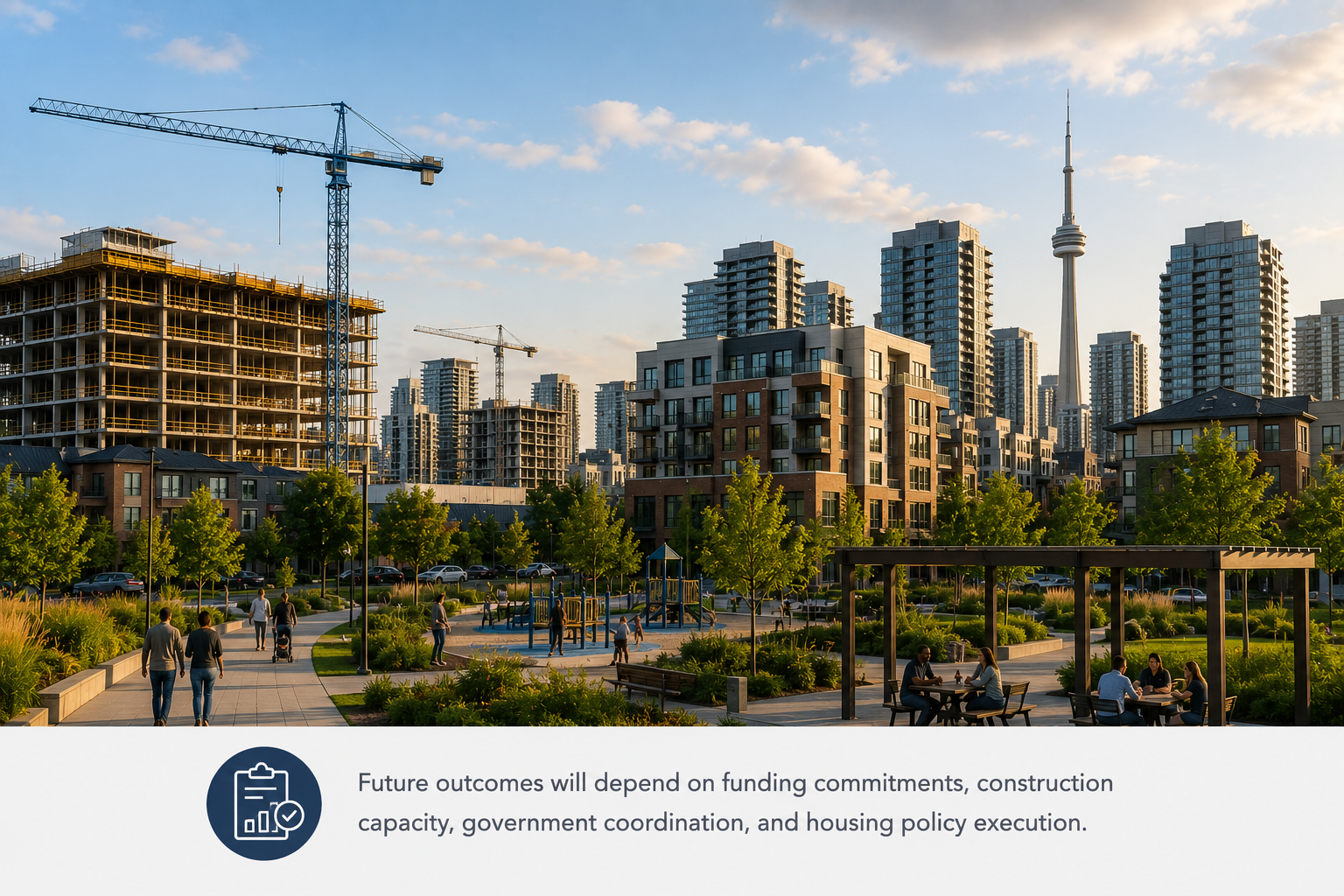
Several key factors will determine whether these projections become reality:
- Provincial and federal funding commitments
- Municipal support for future social housing developments
- Construction costs and labour availability
- Housing approval timelines and development processes
- Efforts to preserve existing affordable housing stock
- Population growth across the GTHA
The report presents an ambitious vision, but execution will ultimately determine the outcome.
What is clear, however, is that conversations about housing affordability are evolving. The focus is no longer solely on building more homes—it is increasingly about creating a housing system that supports economic growth, community stability, and long-term prosperity.
Final Thoughts
Ontario’s housing challenges require solutions across multiple fronts. While private development remains essential, reports like this suggest that social housing may also play a meaningful role in strengthening the region’s housing ecosystem and supporting long-term economic growth.
For buyers, sellers, and investors alike, understanding these broader housing trends can provide valuable context when making real estate decisions in an evolving market.
At Dream House Real Estate, we believe the best decisions are made when market intelligence, local expertise, and long-term strategy come together. Whether you’re buying, selling, or investing, our team is here to help you understand how today’s housing developments may influence tomorrow’s opportunities.
Source Reference:
TorontoToday. (2026, June 1). Building more social housing in GTHA could bring billions in economic benefits: report.
https://www.torontotoday.ca/local/real-estate-housing/building-more-social-housing-gtha-billions-economic-benefits-report-12356818
GTHA Community Housing Collaborative. (2026, June 1). New research demonstrates $102B in value could be created by investing in public housing infrastructure.
https://www.newswire.ca/news-releases/new-research-demonstrates-102b-in-value-could-be-created-by-investing-in-public-housing-infrastructure-815749758.html
Canadian Centre for Economic Analysis. (2026). Public Housing Dividend Report.
https://www.cancea.ca/
Toronto Star. (2026). Building more Toronto-area social housing could give the economy a $50-billion boost, report says.
https://www.thestar.com/